Life has become so complicated and the world is moving so fast that we’re becoming addicted to lists. We have shopping lists, to-do lists, resolution lists, healthy habit lists… Everything seems to need a place on the agenda with its corresponding box to check off with a “done” checkbox.
At some point, immersed in this obsession with organizing and optimizing every minute of the day, we realized we were neglecting something: rest. Thus, sleeping well, relaxing, and unwinding have become new tasks on our to-do list. What should be a natural action becomes an obligation. And that’s not good news, even if it seems like it.
Rest and sleep become an obligation
Sleeping and resting should be the most natural thing in the world. Animals do it without instruction manuals, clocks, or articles on foolproof sleep routines. But humans have so sophisticated our relationship with rest that we’ve transformed it into just another chore.
Slaves to the logic of productivity, we tell ourselves: “I must sleep well today to perform well tomorrow.” But this seemingly innocent idea is a trap, because sleep and rest cease to be a spontaneous and pleasurable act and become a means of achieving performance.
We don’t rest because our body demands it, but because our schedule demands it. And so the bed, which should be a refuge, becomes a hidden office. Instead of a space for calm and relaxation, it becomes the stage for a mental monologue: “I have to sleep eight hours,” “If I don’t rest, I won’t perform tomorrow,” “It’s been twenty minutes and I’m still awake.”
When we lie down in bed with the intention of “meeting” our sleep quota, we activate the exact opposite of what we need: the alert system. Our brain goes into surveillance mode, evaluating whether we’re sleeping “enough,” “on time,” or “well.” Instead of shutting down, the mind becomes a supervisor, monitoring every attempt to close our eyes. And of course, with such a strict internal boss, sleep doesn’t come.
Forced rest loses its essence. Just as forcing someone to relax is often the quickest way to tense them up, forcing ourselves to sleep almost guarantees tossing and turning. What should free us ends up filling us with pressure.
The invisible pressure to perform
Part of the problem stems from the fact that we’ve associated rest with productivity. We’ve stopped understanding sleep and rest as ends in themselves, instead instrumentalizing them and starting to see them as a means to improve performance, be more creative, improve our mood, and even extend our life. Thus, rest becomes instrumentalized and a means to achieve something else.
And even if all of this is true, the side effect of this approach is counterproductive because it increases pressure.
If rest and disconnection become an investment in performance, every sleepless night is perceived as a failure. Someone who goes to bed thinking about how poorly they’ll perform the next day, how unproductive their day will be, or how detrimental it will be to their health, finds it impossible to relax and sleep well.
The phrase “rest to perform” sounds good in a productivity manual, but in practice it turns the pillow into another dashboard. Sleep doesn’t allow itself to be tamed by the logic of performance: the more we pursue it, the further it slips away. As a result, insomnia is often not so much a bodily malfunction as a sign that we’re trying to micromanage something that should happen as naturally as breathing.
What does it mean to truly rest – and how can you achieve it without pressure?
Truly resting means not measuring, not evaluating, not comparing. It means allowing your body to find its own rhythm without demanding immediate results. And it means paying attention to the signals it sends us to rest when we need it, not just when our schedule allows.
It’s also about accepting that there will be good nights and bad nights. And that a good night’s sleep doesn’t begin in bed, but in the attitude with which we approach it. If we view it as a challenge, it will be difficult to fall asleep. If we perceive it as a refuge, we will probably find it easier to relax.
Getting a good night’s sleep is beneficial. Of course. But it doesn’t always have to be an investment in performance. It’s simply something we need and a gift we give ourselves. The key is to regain the enjoyment. Read a little, listen to relaxing music, laze around…
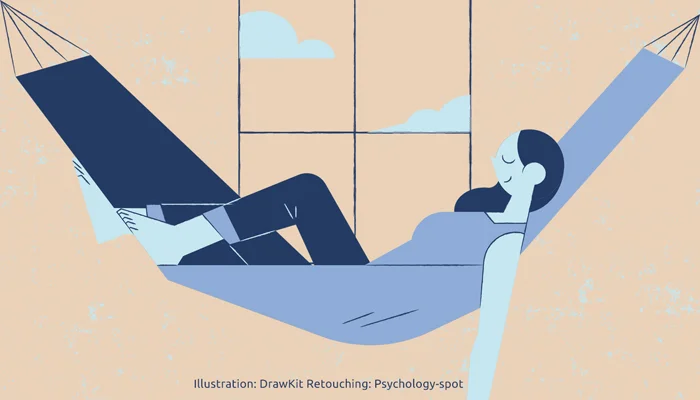
Rest isn’t just closing your eyes or spending time in nature; it’s also lying down and enjoying the dolce fare niente without any goal in mind. Genuine rest doesn’t happen when we time it or demand it, but when we allow it. It’s a space of surrender free from demands, not control or imposition.
Perhaps, when we stop pressuring ourselves to “meet” our sleep, rest, and downtime schedule, we’ll discover that it all comes naturally, without invitation or agenda, just as it always did, before we decided to make it just another obligation.




Leave a Reply