Updated: 14/12/2023 por Jennifer Delgado | Published: 25/06/2018
In Japan is appreciated a traditional art of ceramic repair known as kintsugi, which consists in repairing broken objects using a very strong adhesive that is sprayed with gold dust. As a result, ceramics are not only repaired but also stronger than the original.
Instead of hiding them, the defects and cracks are accentuated and appreciated because they add a new level of aesthetic complexity and transform that piece into a unique artwork. That’s why the repaired pottery increases their value, for the Japanese an object that has been broken is more beautiful and precious because it has much more to tell.
If we apply this perspective to our lives, experiences and emotional problems, we could become stronger and more resilient people.
Anxiety: An unexpected and unwanted travel companion
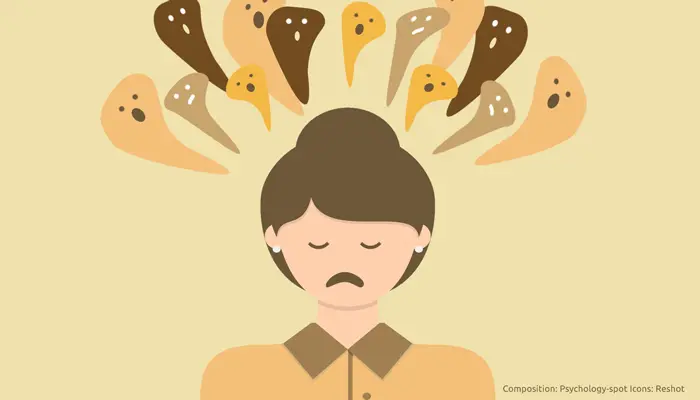
Anxiety is the antithesis of serenity, so it is understandable that nobody wants to feel anxious. That widespread feeling of anguish, fear and apprehension robs us slowly of every moment of our life and prevents us from enjoying them fully, it keeps us trapped in the vicious circle that generates anxiety around us. This is the reason why many people feel that anxiety implies a constant struggle.
Anxiety usually comes without warning to turn into an unexpected traveling companion. At the beginning it is normal that you feel uncomfortable or hate it with every fiber of your being. You feel like it came to ruin you, that absorbed the person you were before.
If you have been anxious for a long time, it is likely that this occupies every molecule of your body. It is always present, it accompanies you everywhere, to the point that you’re fully identified with it.
But you are also many other things. In fact, many positive things can arise from that unpleasant feeling. Anxiety has also a creative nature, it can generate feelings, emotions and thoughts that, if well used, can nourish your personality.
A springboard to become a stronger and more resilient person
Some people succumb to anxiety, others become stronger. The difference doesn’t lies in the situations they have faced during their lives, but in the attitude they have taken.
It is true that it is not always possible to banish the anxiety of our life, it is difficult to eliminate a part of what we are, especially when anxiety is part of your character. However, some people learn to manage anxiety, keep it under control and even use it to their advantage.
There is no doubt that a person who is able to hold a speech, even though he has an enormous stage fright, has great courage and extraordinary strength. The same force that accompanies those who dare to leave the house every day to face life, although their mind bombards them continuously with talk of failure.
It is the strength of those who dare to listen to their emotions and sensations, instead of trying to hide them. These people are aware of themselves, know their weaknesses and do not claim to be invulnerable, but struggle every day to improve. Therefore, anxiety can become the springboard that allows you to grow and be more resilient.
You just need to realize everything you achieved
Anxiety is a fear that projects itself into the future, which means that its natural enemy is the past. Yesterday is history, so it should not scare you or generate anxiety.
Therefore, one of the strategies to get the most out of anxiety is to look at the past honestly, without the filter of resentment, nostalgia or remorse, so you can be fully aware of everything you’ve accomplished.
You will notice that this path was not “perfect”. In fact, it is important that you dwell on the most difficult periods because when everything went wrong and you still managed to find the strength to go on, it is when you have grown the most.
The certainty that, whatever happens, you will be able to manage it, is usually enough to face any kind of fear or anxiety.