Updated: 06/12/2025 por Jennifer Delgado | Published: 25/10/2024
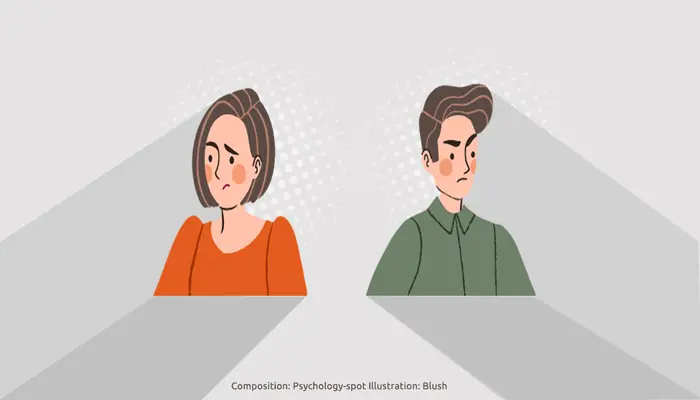
Indifference is often devastating. When someone we care about stops looking at us, stops being interested in how we feel, or stops including us in their world, the emotional message they convey is devastating: “I don’t care about you.” It’s not a fleeting emotion, but a veritable climate of cold war that leaves us emotionally exposed.
Obviously, this emotional void can cause deep wounds. And the more important the relationship is to us, the more devastating the consequences of indifference will be. Few things erode self-esteem and generate as much insecurity as the feeling of being ignored.
When children grow up with indifferent parents, their emotional and social skills suffer considerably, according to a recent study conducted at Cardinal Stefan Wyszynski University. In relationships, this apathetic attitude also becomes a barrier that generates negative feelings and hinders conflict resolution, as psychologists at the University of Sussex found.
However, understanding why a person is indifferent can help us mitigate these effects or even break through that layer of coldness to establish a warmer and more satisfying relationship.
The main causes of indifference and how to manage them
When indifference appears in therapy, it rarely comes alone. Rather, it’s the final expression of emotional processes that have been developing for some time, such as accumulated frustration, latent conflicts, emotional exhaustion, unresolved resentments, and emotional distance. In fact, it’s one of the main concerns of couples who come to therapy. And with good reason.
From experience, I’ve found that indifference often arises when a person feels they no longer have the resources to connect or when they believe it’s safer to protect themselves emotionally than to become involved in the relationship (processes that aren’t always the result of a conscious decision). Therefore, understanding the causes of indifference requires going beyond visible behavior and examining the emotional history of the relationship.
1. Little emotional involvement
Although reciprocity is desirable in relationships, it’s not always the case. Sometimes, someone can be very important to us, but we don’t occupy that same place in their emotional landscape. Some people appear indifferent because they don’t feel a strong bond, they don’t perceive a real emotional connection, and therefore prefer to maintain a certain distance.
How to respond?
If you notice that someone isn’t emotionally involved, accept that your connection isn’t as deep as you hoped. Some relationships simply never reach the point you desire. In that case, conserve your energy and dedicate your time to those who truly value your presence.
2. Personal self-protection
Some people prefer not to love or commit to avoid getting hurt. In these cases, they prefer to distance themselves emotionally and use indifference as a shield. Generally, behind this attitude lies a fear of commitment and/or a reluctance to form emotional ties. When you dig deeper, you might discover that these people have personally experienced traumatic abandonment and don’t want to relive that pain.
How to act?
When indifference stems from a fear of being hurt, the most helpful approach is to demonstrate confidence and consistency. Don’t try to force affection; simply let them know you’re available and not a threat. Patience and supportive gestures will be your best allies.
3. Manipulation weapon
In some cases, especially in romantic relationships, indifference becomes a weapon of emotional manipulation. When one person knows the other loves them enough to give in, they may adopt an indifferent attitude to achieve their goals. In these cases, indifference is used as a form of punishment, making their affection and attention contingent on the other’s “obedience” and submission.
What to do?
If you notice someone is trying to control or punish you, the best course of action is usually to create some psychological distance to gain perspective. Clarify your expectations, set boundaries, and consider whether maintaining the relationship is worthwhile.
4. Need for space
Some people are naturally more emotionally distant than others. They don’t easily express their feelings and prefer to keep their distance. Sometimes, it’s not a personality trait, but rather a sign that they’re going through a period in their lives where they need more space, such as adolescence or after a breakup. As a result, these people may resort to indifference as a strategy to protect their personal space.
How to react?
This kind of indifference is actually more of a sign that the person needs time for themselves. From experience, I know that the best thing to do is respect that space and not insist, because it would have the opposite effect. Maintain an understanding and available attitude, without being intrusive, and let the relationship adjust naturally.
5. Self-denial
A person may adopt an indifferent attitude because they see in others something they recognize in themselves but refuse to acknowledge. For example, someone who has climbed several social rungs may be indifferent to people belonging to a social group that reminds them of their past. Another person might also act indifferently toward someone who has achieved what the first person has not. In these cases, indifference is a protective shield, preventing their idealized self from experiencing inner conflict.
How to respond?
If the person is distant because they don’t want to acknowledge their feelings, I recommend avoiding pressuring them. Instead, try to create a safe environment where they feel heard without being judged, and let them know you’ll be there when they’re ready. That patience can be the bridge that helps them connect with themselves and with you.
6. Learned Models
Indifference doesn’t always arise consciously; often it’s a behavior learned in childhood. If a person grew up in an environment where emotions weren’t openly expressed, love was conditional, or attention and affection were withdrawn as a form of punishment or control, they’re likely to internalize that emotional distance is normal or even necessary. In these cases, indifference is an automatic pattern in which what has been experienced is replicated because it’s perceived as the “natural” way of relating to others.
How to act?
When indifference stems from patterns learned in childhood, it’s important to remember that it’s not personal. Don’t assume that distance is a rejection of you. The best approach is to model how to connect and engage.
7. Desire to cause harm
Unfortunately, some people are particularly resentful and aware that they still hold emotional power over others, using indifference to cause harm. In these cases, indifference ceases to be mere distancing and becomes a weapon of revenge, used to strike where it hurts most, exploiting the other person’s need for affection, recognition, or connection.
How to respond?
If you suspect someone is adopting a distant and indifferent attitude to intentionally hurt you, stay calm, but protect yourself. Don’t engage in revenge or try to “correct” the other person. Sometimes, the wisest course of action is to create some distance.
It’s important to clarify that there are also cases where a person responds with indifference without realizing it, so sometimes it’s enough to point it out, indicating how much that attitude hurts us and how we would like the relationship to be. Furthermore, the causes of indifference sometimes overlap, since each situation is unique and interpersonal relationships are very complex.

Why is it important to discover the causes of indifference?
Indifference and emotional distance are painful, but that pain is even more intense when we don’t understand why. Identifying the causes of indifference will allow us to understand what is happening, and then decide how to respond and what path to take.
Psychologists frequently observe that many people experience great relief when they can identify what’s happening to them. Knowing whether the indifference stems from fear, exhaustion, learned patterns, or even a desire to hurt, frees us from undue blame and helps us begin to see the situation more realistically.
Furthermore, understanding the root of behavior allows us to choose more adaptive responses. We learn to determine when and how close to approach, when to give space, and when to protect ourselves.
Understanding the “why,” ultimately, completely changes the emotional experience. Indifference loses its wounding air of mystery and becomes information we can use, and which, in a way, even empowers us.
References:
Cohen, S. et. al. (2022) Meh, whatever: The effects of indifference expressions on cooperation in social conflict. Journal of Personality and Social Psychology; 123(6): 1336-1361.
Szymańska, A. & Aranowska, E. (2021) Parental stress and indifference and the parent’s withdrawal from the relationship with their child: a structural approach. Psychiatria Polska; 55(3): 675–699.
Abbasi, I. S., & Alghamdi, N. G. (2017) Polarized Couples in Therapy: Recognizing Indifference as the Opposite of Love. Journal of Sex & Marital Therapy; 43(1): 40–48.