Updated: 10/12/2023 por Jennifer Delgado | Published: 29/08/2019
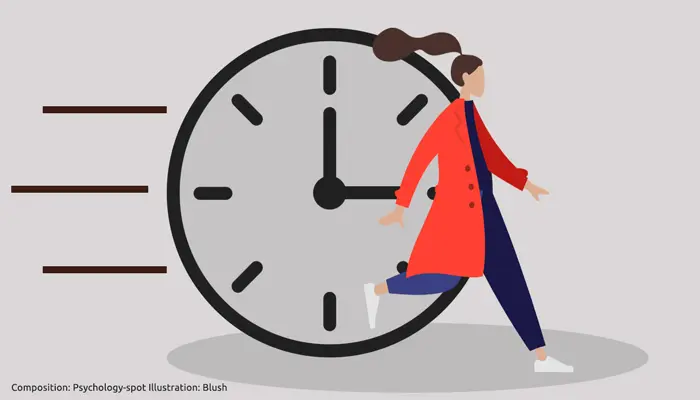
“Killing time” has become one of the imperatives of our society. Bored, terrified by the minutes that run, we feel obliged to lay hold on any entertainment or activity that helps us alienate ourselves from the relentless passing of the clock hands, as if we could avoid our own mortality, as if we could forget that time is the matter from which life is made.
“What we dedicate our time to is definitely what we assign our life to. And this has a limited duration, although we are not pleased to be reminded. We are finite beings, with a beginning and an end, immersed in a time that passes inexorably. Killing time is actually squandering or consuming part of our life.
“Who manages his time well, manages his life well. And who does not find time to reflect, plan or schedule, can hardly carry out any project of a certain size. He may not find time for himself”, wrote psychologist Guillermo Ballenato.
What differentiates people who kill time from those who take advantage of it?
“Killing time” means filling the empty hours as we can, indiscriminately, with useless leisure or unbridled activity – the same is true – because they both contain the seed of unconsciousness.
Killing time is, in the end, the indolent attitude of those who are not aware of their mortality, or who fears it so much that they need to hide behind the inconsequential to silence their own inner demons, so as not to face the need to set course for their life and discover what they really enjoy, what they want to do and, above all, what they don’t want to do.
Whoever kills time is imbued with a kind of everyday hyperkinesia that takes away all contemplative possibilities and the ability to delay and enjoy, as the philosopher Byung-Chul Han wrote. “Thus events quickly detach from each other, without leaving a deep mark, without becoming an experience”. It’s living without living.
On the other hand, taking advantage of time does not mean, by any means, working continuously or being permanently occupied, but dedicating ourselves fully and consciously to those things that are really useful, allow us to enjoy or contribute something to grow as people – and that too it implies resting, relaxing or engaging in dolce far niente.
The difference between wasting and taking advantage of time lies in the objective and attitude with which we undertake certain activities. If we read a book because we really enjoy reading, it gives us knowledge or allows us to grow, we will be “taking advantage of time”. If we only read it because we are bored, because we can’t think of anything better to do, because it is what we have at hand and when we close it, we automatically forget everything, then we will be “killing time”.
Don’t kill time, take advantage of it!
They say that the last words of Queen Elizabeth I of England on her deathbed were: “Everything I own for a moment of time”. The key for learning to value our time in its proper measure – without obsessing with its passage but not unconsciously squandering it – is to accept our mortality, to understand that each day is a precious gift composed of 1,440 minutes that pass one after the other, in a silent and inexorable way, until, at a certain point in life, time stops running to start flying, precipitously, without handles to hold on to.
We must avoid the mistake of thinking that “Who lives twice as fast can enjoy twice as many options in life”. We must banish the idea that “The acceleration of life causes it to multiply and approach the goal of a full life”, because a full life is not measured in terms of quantity but of meaning. You don’t live more to do more. You live more when you enjoy more. When the things we’re doing make sense to us. That is why, “Who tries to live faster, also ends up dying faster”, killing time with a leisure that brings nothing but the unconsciousness of disconnecting from reality, according to Han.
Instead, we need to understand that only when we are fully aware of our mortality can we get the most out of every minute. Then, and only then, we stop killing time to start taking advantage of those things that really bring us and allow us to live fuller experiences, extending the present moment as much as we can.