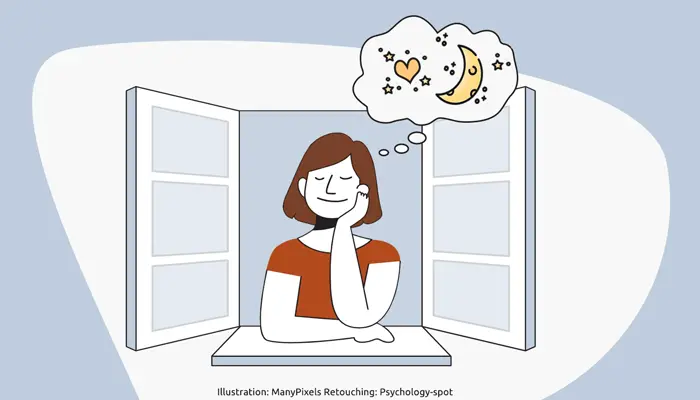
Have you ever finished a project, a school year, a relationship, or a year, but felt like it wasn’t really over because “something” was missing? It’s as if the ending were incomplete, as if there were a final detail missing that never came.
That feeling of wanting everything to fit together, for each chapter of our lives to have a “proper” ending, is more common than we think. We cling to the idea of a perfect closure, even though reality reminds us time and again that life rarely offers conclusions as neat and satisfying as we would like.
What is perfect closure syndrome?
Perfect Closure Syndrome refers to our obsession with things ending in the most satisfactory or logical way possible. It’s based on the idea that everything must conclude impeccably, orderly, and positively, as if every piece must fit together perfectly before moving on to the next step.
These expectations don’t just apply to projects or relationships, but to any experience that involves an ending: a year ending, a trip about to end… Those who harbor these ideas about the perfect closure experience constant pressure to achieve an ending that leaves everything “resolved.” And if they don’t achieve it, they can’t move on.
The trap of happy endings
Since we were children, we hear, read, and watch stories that teach us that happy endings are the norm, not the exception. Fairy tales, family movies, and even TV series show us worlds where problems are always resolved, the bad guys are punished, and the heroes are happy.
This bombardment leads us to internalize an impossible standard of closure. In our minds, a good ending isn’t just desirable, it’s mandatory. The problem is that life rarely follows a Hollywood script.
“Perfect” endings are the exception, not the rule, especially when we have unrealistic expectations. Then frustration sets in. We settle into a feeling of emptiness or a feeling that something went wrong, which becomes a source of chronic anxiety.
For example, imagine a year is coming to an end and you were hoping to “close it with a flourish”: a promotion, a dream vacation, or a relationship reconciliation. If that doesn’t happen, even if the year was halfway decent, you focus on what was missing, which distorts your perception of the past and can lead to an unjustified sense of failure.
Why do we look for perfect endings?
We’ve all longed for a happy ending where everything fits together like the pieces of a puzzle. We want a clean, satisfying, and, if possible, movie-worthy ending, as if the universe owes us a proper closure. This need for perfect endings has deep psychological roots that we must understand in order to better manage our expectations.
- Need for control
Life is largely unpredictable and chaotic. However, perfect endings give us the illusion that everything is under control. When things go wrong, we can cling to the idea that everything will eventually work out. This gives us a temporary sense of security and helps reduce emotional uncertainty. Therefore, wishing for that perfect ending is an attempt to establish order and regain control amidst chaos.
- Emotional closure
Our brain functions as a kind of experience organizer. When something important ends, we need to process it to close the circle. A clear ending allows emotions to flow more easily, allowing us to reflect and, eventually, let go of what is no longer part of our lives. Without that closure, feelings remain in a no-man’s land, causing discomfort, obsession, or even prolonged sadness.
- Search for narrative coherence
We learn to interpret events as stories. Our minds organize memories into a beginning, middle, and end, and perfect endings are important for making sense of what we experience. In fact, this need for narrative coherence is so strong that we sometimes even change some memories to fit an ideal ending. When life doesn’t follow this narrative structure, we may perceive it as unfair or incomplete, and this creates dissonance and dissatisfaction.
It’s worth noting that, in recent times, the rise of social media and the sugar-coated lives published on them also amplify the expectation of a spectacular outcome worthy of a photo or a memorable video that can be shared.
How can we reconcile ourselves with imperfect endings?
Accepting that life doesn’t offer the cinematic closures we’re used to seeing in movies is liberating, although it requires practice and self-awareness. Life doesn’t need a slow-motion musical montage with a perfect backdrop. Everyday experiences are far more valuable, even if they aren’t Oscar-worthy, even if they’re a bit chaotic, and even if they don’t always end as we expect.
- Redefine success. Instead of expecting a perfect ending, focus on celebrating the small achievements and progress. Remember that every step counts and that the journey is often more important than the destination.
- Practice gratitude. Recognizing what went well or what you’ve gained helps your brain focus not only on what was missing.
- Accept uncertainty. Life is constantly changing. Sometimes there are no endings because one story intertwines with another. This is perfectly normal, and we must learn to live within this web of developments.
- Separate expectations from reality. Remembering that movies and social media are designed to excite or project an idealized image, not to reflect real life, will allow us to adjust unrealistic expectations.
- Learn from the process, not just the result. You have to learn to enjoy the journey more and not obsess so much over the outcome. In the end, the person you’ve become and everything you’ve learned are often more important than the goal you’ve achieved.
Learning to live without a script
Perfect Closure Syndrome reminds us that our minds seek coherence and control, but life is much more messy than any movie. Being able to let go of the need for those spectacular, happy, or “perfect” endings allows us to enjoy the process more, reduce anxiety, and appreciate what we have in each moment.
Life doesn’t always have fairytale endings, and that’s not just okay, it’s sometimes necessary, because unexpected twists, open endings, and improvised changes are what truly teach us, make us grow, and connect us with reality as it is, not as we wish it were.
So the next time you’re hoping for a perfect ending, remember that you don’t need a final round of applause or an epic soundtrack to make your story worthwhile. The true magic lies in the unique path you take, in the small moments, and in accepting that imperfection also has its charm.