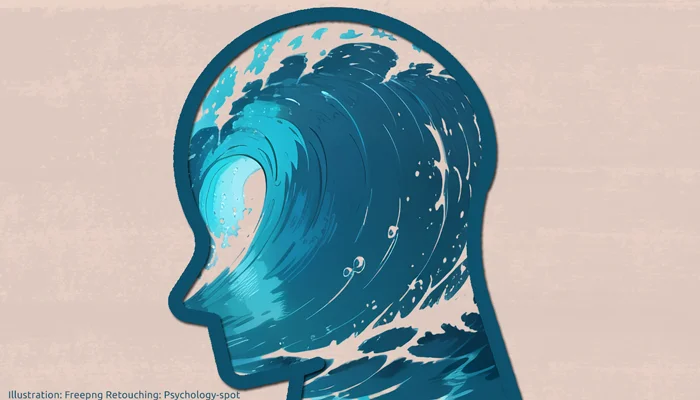
In life, we sometimes go through difficult times, whether it’s a significant loss, a state of inner turmoil, or drastic changes. In these situations, it’s easy to get caught up in worry, ruminating, and sadness.
This is because our minds suffer from a negativity bias that gives more weight to problems and misfortunes while overlooking or minimizing the positive. This mechanism, although useful in certain circumstances, risks leading us to depression or anxiety.
Positive anchors act as a counterweight to this bias. They sustain us when things start to go south and remind us that our story isn’t just made up of pain, but also moments of support, tenderness, success, joy, and fulfillment. In fact, knowing how to use these anchors is key to avoiding hitting bottom emotionally.
What are positive emotional anchors?
Positive anchors are experiences, memories, or stimuli that generate a state of calm, security, or joy almost automatically. The emotional anchoring technique comes from neurolinguistic programming (NLP), although its roots lie in behavioral psychology.
In his famous experiments, Pavlov showed how a neutral stimulus (the sound of a bell) could be associated with an automatic response (salivation in dogs) through classical conditioning. Anchoring is not very different from this process, as it involves associations between a stimulus and an emotional response.
This explains why certain songs, scents, places, or even gestures can awaken very intense emotions: they are etched in our memory as gateways to meaningful experiences. Just as a painful memory is easily reactivated by a word, situation, or even a scent, the same can happen with positive moments, which have the potential to become sources of emotional energy.
Basically, these anchors act as “neurological shortcuts”: we don’t need to work too hard to relive an emotional state; all we need to do is find the right stimulus that triggers the associated memory. Therefore, they are an invaluable tool for our well-being.
A shelter in the midst of the storm
Resilience, understood as the ability to overcome adversity, isn’t built through sheer willpower alone. It requires emotional foundations to support it. Positive anchors are one of those supports, an emotional reserve we can draw on in moments of vulnerability.
Of course, it’s not about living in a constant flashback of the positive, nor about denying the challenges or problems of the present. It’s about learning to access the internal resources we already have and often forget, swept away by circumstances. It’s about balancing the negative by activating memories and sensations that allow us to calm down.
When everything seems difficult, remembering that at some point we were able to laugh, that we loved and were loved, or that we were able to overcome a seemingly impossible difficulty is like turning on a light in a dark room.
Circumstances don’t disappear, but our way of experiencing them transforms. That’s the essence of positive anchoring: offering an emotional refuge in the midst of the storm. It doesn’t erase problems, but rather cushions their impact. It functions as small islands of stability where we can rest and regain balance. It reminds us that, even in difficult times, we can experience positive emotions.
Identity and emotional continuity
Positive anchors not only provide us with an instant sense of well-being, they also reinforce our identity. They remind us of who we are beyond the current situation. A person who relives a sense of pride when recalling a past achievement is not only encouraged, but also reconnects with the idea of themselves as capable and persevering.
This is particularly important in times of crisis, when identity is shaken. Losing a job, breaking up a relationship, or having to deal with an illness can cause us to doubt ourselves.
In these moments, positive anchors act as a kind of internal compass: they remind us that, even if we feel vulnerable and dejected today, we are still the same person who in the past managed to overcome difficult challenges or enjoyed moments of fulfillment. They are, in a way, small capsules of identity that endure even when the present makes us doubt ourselves.
Furthermore, positive anchors reinforce the sense of continuity in our life story. They help us connect the different chapters of our lives and not remain trapped solely in the painful episode we are going through. This continuity is essential for maintaining psychological coherence. Without it, adversity can make us feel fragmented, as if everything we have experienced before has lost its value.
Ultimately, positive anchors have the power to give us a broader perspective. They allow us to see the whole story by reminding us that we are much more than the specific crisis we are going through and that our identity is sustained by a broad network of experiences, lessons learned, and connections that have shaped us over time.
The need to cultivate positive anchors
We can think of positive anchors as an emotional savings account. Every significant positive experience we store in our memory functions as a deposit. When a crisis hits, being able to withdraw these “deposits” from that account will prevent us from being left in the emotional red.
Obviously, it’s not enough for positive memories to exist; we need to give them value and space. We often have precious experiences that we let pass without stopping to appreciate them. Over time, they become blurred and lose their strength as anchors.
Therefore, it’s essential to live with greater presence and periodically reactivate those memories that fulfill us and bring us calm or joy. This could be the lifeline that keeps us afloat in times of storm.




Leave a Reply