Updated: 20/01/2024 por Jennifer Delgado | Published: 05/12/2016
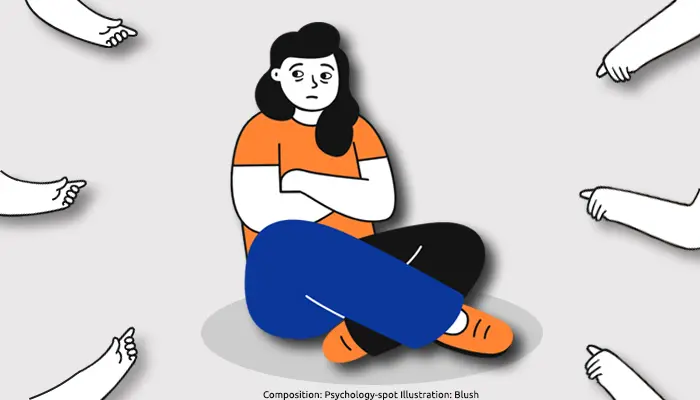
The word “criticism”, as many others that we use every day, has strayed far from the original meaning. In fact, it derives from the Indo-European root “skribh” which originally meant to separate and discern. Later this word has taken on another meaning, more related to the ability to make a decision and make a judgment. Then it continued evolving and today many people give it a completely negative meaning.
However, the criticism itself isn’t bad, it all depends on how it is made. There are criticisms that can help to grow and criticisms that can destroy. So, essentially, the criticism also says a lot about us, the person who criticizes.
The 3 types of criticism that reveal your deeper “ego”
Niccolo Machiavelli said that “in general, men judge more with their eyes than with the mind, as everyone can see, but few understand what they see”. Therefore, the criticism always expresses who we are and what we think. Through a criticism we reveal our stereotypes and expectations, and sometimes even our mood. In fact, though few realize it, the way we criticize is one of the most intimate expressions of our personality, through which we put ourselves completely bare before the more sensitive eye.
There are several types of criticism:
– The friendly criticism. In this case it is critical that the person be able to establish some emotional bond with the other, therefore his/her criticism is based on empathy. The purpose is to help, protect, motivate and/or develop. This kind of criticism is related to the greek concept of “parresia”, which means to speak frankly and free for the good of the others, even if this means taking some risks. Obviously, people who use this type of criticism are invaluable and we should make sure to have them always at our side, because they help us to see what we can’t even imagine.
– The “objective” criticism. In this case the person adopts an indifferent attitude, establishes an emotional distance and often use more impersonal and abstract arguments to support his/her opinion. The problem is that, usually, the aim of this criticism is to correct and often is used as an excuse to cover up hostility, envy or to highlight the own intellectual and moral superiority. In fact, many people mask their own feelings under this appearance of “objectivity”, which usually hides the idea that only they are at the service of truth and perfection, or know how to do things well.
– The hostile criticism. In this case, the person attaches directly through criticism, regardless of the damage that can cause. In fact, the objective is to reject, blame, discredit or destroy directly. But to achieve this you can use different strategies, which are not always frontal attacks, so sometimes it’s difficult to distinguish these criticisms. After all, these critics express the inability of the person to take the place of others, manage their emotions and relate from a respectful position. Obviously, it is essential to learn how to protect yourself from these criticisms, because they can do much harm.
Think twice, speak less
Criticism always says more about who critics tan who’s criticized, because it expresses a way of seeing the world and values in interpersonal relationships. Therefore, it is desirable that before criticizing, you think what the words you’re ready to say are telling of you and you wonder if this is the image that you want to cultivate and show to the world.
In fact, you can use criticism as a tool for change, to get to know yourself better and grow as a person.
1. Analyze what motivates this critique. You often react with acid and exaggerated criticism, you’re probably not reacting to that specific situation or the person in front of you, but your reaction is rather a reflection of a much deeper problem, since it indicates frustration, anger, disappointment and/or insecurity. Therefore, the problem doesn’t lie in what you are criticizing, but consists in something inside you that you should fix.
2. Put yourself in the shoes of the other. Before you criticize, try to put yourself in the place of the other. Remember that it is often easier to become a judge than be a helping hand. Try to understand why the other acted that way. Understanding and empathy will say more positive things about yourself that anger and intolerance.
3. Give an opinion, not a judgment. Criticism, to avoid generating a defensive attitude, should remain an opinion, not become a judgment. If you turn into a judge you’re just proving your incapacity to be empathetic and your arrogance. It’s not the same thing saying: “what you’ve done is pointless” than “I don’t like what you did”. In the first case is a value judgment, even exaggerated, in the second it is only an questionable opinion and, as such, an opportunity of growth for both parties.
In any case, it is always better to criticize less and help more, speak less and think more, watch more within ourselves rather than point the finger to the others.