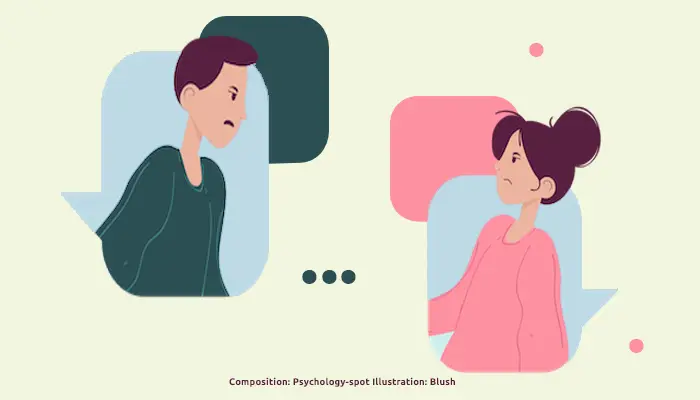
Bullying is an aggressive act that creates fear in others. But it is not always manifested openly. Because our culture condemns violence, many acts of bullying are passive-aggressive behaviors that, however, leave a deep emotional mark.
Bullying someone is a strategy to demonstrate our power and achieve our goals, but it can also be a tactic to defend ourselves and ensure our safety. In fact, although some people may even feel pleasure in bullying others because of the feeling of power and control it generates, others do it more unconsciously, because they feel insecure, vulnerable or attacked.
Bullying a person: the signs you are ignoring
Do some people seem to avoid you or act uncomfortable around you? Do others not dare to disagree or contradict you? Sometimes, your words, gestures or attitudes can project a more intimidating image than you imagine. And although having the last word and not being contradicted can seem like a triumph or a sign of respect, in the long run this dynamic will turn against you.
If people around you are unable to voice their disagreements, they are likely to start repressing their ideas or emotions. Not only will this create invisible tensions, but it will also encourage superficial communication, where no one says what they really think. Ultimately, this disconnection will end up eroding your relationships.
Furthermore, if your intimidating attitude closes the door to criticism, you will not be able to receive feedback, so you are likely to lock yourself into a cycle of complacency in which you do not grow or learn anything new. For these reasons, it is best to be aware of the behaviors that tend to intimidate people.
1. You speak in an overly authoritarian tone
It matters both what you say and how you say it. The tone you use when speaking not only conveys information, it also communicates emotions, attitudes, and sometimes social hierarchies. An overly authoritarian tone can send an implicit message: “I am in control ” or “my opinion is more important than yours.” This can make the other person feel uncomfortable, underestimated, or even intimidated by what they perceive as an attitude of superiority.
What can you do? Try to adjust your tone to the context. While it is important to use a firm tone in some circumstances, in casual conversation it would be better to adopt a more open approach that shows interest. It is a good idea to replace commands with suggestions and sharp statements with questions. For example, asking “what do you think if we do it this way?” is much better than imposing your way of seeing or doing things.
2. You use overly dominant body language
Nonverbal language has a significant impact on how others interpret your intentions. Gestures such as crossing your arms at chest level, invading personal space or maintaining a rigid posture can be interpreted as signs of power, even if you don’t mean to. You may think you’re just acting confident, but that can make those around you uncomfortable and alienate them. In fact, such behaviors often generate rejection in others, making them feel intimidated as they can be interpreted as a threat or sign of arrogance.
What can you do? Pay more attention to your posture and movements. Uncross your arms while talking, keep your body language open, and respect personal space. There are many small gestures that show receptivity, such as leaning slightly forward while listening or gently nodding your head to show that you are paying attention to the conversation. These gestures bring people closer, not intimidate.
3. You ask too many direct questions
Asking questions can be a sign of interest and even a powerful tool for connecting with others, but when you use them excessively, inappropriately, or in an overly pointed tone, they can make people uncomfortable and intimidate. This habit can give the impression that you are evaluating or even criticizing them, which often leads to defensive or evasive responses.
What can you do? First of all, make sure your questions reflect genuine interest and curiosity, and don’t contain any value judgment. For example, constantly asking “Why did you do that?” can sound accusatory. Ideally, you should rephrase your questions in a more open-ended way, such as “Why did you do that?” This will make the person feel safer and encourage communication.
4. You hide your vulnerability
You’ve probably been taught to project an image of strength. Sure, sometimes it’s important to show strength and confidence, but you shouldn’t forget that other times it can be an emotional barrier that prevents people from approaching you. Due to the Pratfall Effect, we find people who make mistakes and show vulnerability more sympathetic, simply because they bring out their more human side and we see that they are just like us, so we don’t see them as a threat.
What can you do? If you never admit a mistake or hide how you feel, others may perceive you as unapproachable or, worse, as someone who is arrogant and considers themselves superior. Try to open up a little more in your interactions: share your thoughts or concerns whenever it’s appropriate. Saying something as simple as, “I’m not sure, what do you think?” can make others feel valued and comfortable.
5. You constantly correct others
We all make mistakes. And correction is not inherently negative. In fact, it can help us grow and adopt new perspectives that we had not considered. However, the habit of constantly correcting others can be perceived as a form of arrogance, arrogance or control. Each correction is a blow to the other person’s self-esteem and generates a feeling of incompetence or inferiority complex.
What can you do? To minimize the impact of intellectual or emotional bullying, choose your battles wisely. Before correcting, ask yourself, “Is this really important?” And if you do decide to intervene, use a constructive approach: “I love your idea; how about we tweak it a bit to make it better?” Use feedforward to make your words more welcome and not intimidate the person.
Being aware of how our behaviors and words impact others is the first step to building more balanced and genuine relationships. No one is perfect, we all do things that can be misinterpreted or even intimidate a person without realizing it. The important thing is to reflect on those situations and change our attitude if necessary in order to connect from a more human and empathetic position.