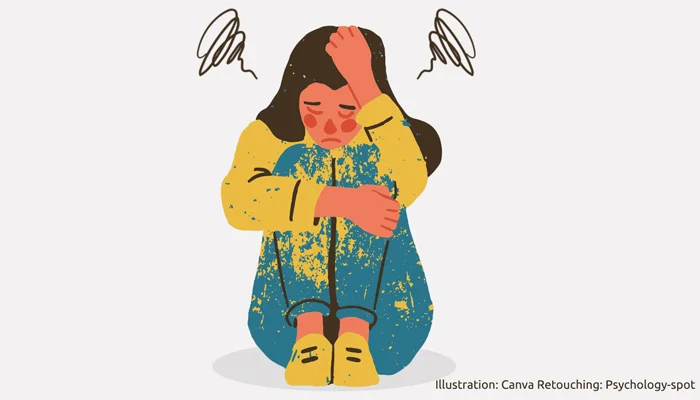
Dependent personality disorder is characterized by a long-standing need for attention and a fear of being abandoned by significant others. This fear leads the individual to develop dependent and submissive behaviors through which they attempt to keep others attached. However, this attitude often has the opposite effect: it pushes others away because they are perceived as too clingy or suffocating.
Those who suffer from dependent personality disorder are often characterized by pessimism and self-doubt. They tend to undervalue their abilities and qualities and may constantly refer to themselves using adjectives like “stupid” or “foolish.” In fact, they take criticism and disapproval as proof of their worthlessness and quickly lose confidence in themselves.
Because they constantly seek to care for others, their work life can suffer, especially if initiative and independence are required. For this reason, they may avoid positions of responsibility and feel anxious when faced with decision-making. Often, their social relationships are also limited to the few people they know and depend on in some way.
The main symptoms of Dependent Personality Disorder
This disorder is characterized by a pervasive fear of losing others, leading to “clinging to people.” It usually manifests in early adulthood, but symptoms are noticeable much earlier, generally from childhood.
- Difficulty making everyday decisions without receiving guidance and approval from others.
- Need for others to take responsibility in most areas of their life.
- Difficulty expressing disagreement for fear of losing support or approval.
- Problems starting projects or doing things on one’s own, usually due to a lack of self-confidence.
- Crossing boundaries in the search for care and support from others, to the point of volunteering to perform more unpleasant tasks, for example.
- Feeling helpless when alone due to exaggerated fears of being unable to take care of oneself.
- She moves from one relationship to another urgently because she needs them as a source of attention and support.
- Excessive worry about not being able to take care of oneself or not achieving anything in life.
As with other personality disorders, a person must be at least 18 years old to be diagnosed by a psychologist or psychiatrist. It should also be noted that the symptoms of dependent personality disorder usually lessen over time, although in some cases the most acute phase occurs around age 40 or 50.
What causes Dependent Personality Disorder?
The causes of dependent personality disorder are not fully understood, although according to the biopsychosocial theory it would be a mixture of biological and genetic, social and psychological factors.
In fact, genetic influence cannot be ruled out, as this condition has been observed to occur in families with a history of personality disorders or other mental disorders. A study conducted at the Norwegian Institute of Public Health concluded that this disorder has a moderate-to-high heritability.
At a neurobiological level, certain differences in brain structure and function have also been found, such as alterations in the activity of areas related to decision-making and emotional regulation, which could increase the predisposition to dependent personality disorder.
Furthermore, it has been suggested that early experiences of abandonment or neglect can contribute to the development of this problem, as they may lead to a perception of insecurity and a constant search for external support. In fact, children who have suffered serious or chronic physical illnesses or who have experienced separation anxiety may be more likely to develop this dependent relationship and fear of abandonment in adulthood.
Furthermore, a culture that emphasizes submission and dependency could foster the development of this disorder. Experiences of victimization or abuse in childhood can contribute to the formation of dependent relationship patterns in adulthood.
All of this suggests that there is not a single responsible factor, but rather that it is a disorder of a complex nature.
What is the treatment for Dependent Personality Disorder? Peculiarities to consider
Many people with dependent personality disorder do not seek treatment until the problem begins to significantly interfere with their daily lives or the lives of others, who are usually the ones who urge them to seek psychological help.
It’s important to keep in mind that these individuals often need a great deal of attention, validation, and social interaction, although they generally don’t present themselves dramatically like those with histrionic personality disorder. In fact, it’s crucial to establish clear boundaries because sometimes these individuals’ needs can be so great and overwhelming that they will try to test the limits of the established therapeutic framework, which is why it’s not uncommon for even psychologists to end up experiencing burnout.
A clear explanation at the beginning of therapy about the treatment process, including an analysis of the appropriate timing and contact requirements with the therapist between sessions, is vitally important. However, this dependent attitude often leads to a passive approach to treatment, which can delay psychotherapy, the treatment of choice in these cases.
It should also be considered that many of these individuals experience a range of physical or somatic symptoms. While medication can be prescribed to alleviate these symptoms, it’s essential to monitor their use to ensure they are not being overused. In general, physical complaints should neither be minimized nor ignored, but neither should they be encouraged, as the best place to address them is not in a psychologist’s office, but rather with a doctor.
In general, psychotherapy focuses on increasing self-efficacy so that the person can be more independent in their daily life. For this reason, the most effective psychotherapeutic approach is usually solution-oriented, addressing the specific problems the patient is experiencing.
Therapy addresses the underlying misconceptions and the emotions they generate regarding a lack of confidence, for example. Assertiveness training and other proven behavioral approaches can also be used to help people with this disorder.
However, it should be considered that long-term therapy, which is ideal for many personality disorders, is contraindicated in this case as it would reinforce the dependency relationship with the therapist.
Group therapy in dependent personality disorder
Group therapy can be a valuable tool because it offers a real relational environment in which the person can practice social skills, express needs more assertively, and contrast their fears of rejection or abandonment with more balanced interpersonal experiences.
However, its use requires careful clinical guidance, as these patients tend to seek substitute support figures within the group (either the therapist or other members) and establish excessively enmeshed or asymmetrical relationships. Without adequate supervision, the group can become a setting where patterns of submission, emotional dependence, or constant delegation of decisions are reinforced.
Therefore, the therapist must actively foster autonomy, self-responsibility, and personal differentiation, encouraging each participant to reflect independently, learn to tolerate relational insecurity, and cope with their emotions without relying excessively on others. In this way, group therapy does not become a space of dependency, but rather a relational laboratory for developing healthier and more balanced relationships.
The end of therapy, a delicate step
Ending therapy with someone who has dependent personality disorder is a critical step that requires careful planning. Although ending therapy should always be a joint decision between the psychologist and the patient, these individuals often have difficulty determining “when enough is enough,” showing a tendency to prolong therapy beyond what is necessary.
With that in mind, the therapist may need to actively guide the patient towards the end of the intervention, establishing clear boundaries and reinforcing the capacity for autonomy.
During this phase, it is common for the patient to relive feelings of insecurity, low self-esteem, increased anxiety, and even depressive episodes. These experiences are part of the typical response to the end of the therapeutic relationship and should be addressed in a validating yet structured manner.
This means the psychologist must prevent the patient from using these symptoms as an excuse to indefinitely extend therapy, maintaining the focus on a consensual and planned closure. Likewise, it is essential to acknowledge and reinforce the progress made, encouraging the patient to apply their advancements in emotional management, decision-making, and personal autonomy, thus consolidating a therapeutic closure that is both safe and empowering.
Are medications necessary?
In dependent personality disorder, as with other personality disorders, medication use should be limited to specific clinical problems , generally associated with an Axis I diagnosis (such as depression or anxiety disorders). Indiscriminate prescribing is particularly risky in these cases due to the tendency toward substance abuse and sedative overdose. Anxiety medications and antidepressants should only be used when there is clear evidence of a co-occurring disorder.
It’s important to consider that the anxiety these individuals often experience is situational and relational, stemming from their need for support and fear of abandonment. Therefore, medicating them can interfere with the development of coping and autonomy skills addressed in therapy. For this reason, physicians should resist the temptation to prescribe medication for multiple somatic complaints or transient states of emotional distress, as this can reinforce dependency rather than promote self-management.
In any case, medication is always a complement, not a substitute for psychological therapy, and its use should be clearly explained to the patient to avoid unrealistic expectations about “magic solutions” to problems of emotional dependency.
References:
Tariq, W. et. Al. (2023) Dependent Personality Disorder: An Approach Based on fMRI. Austin Journal of Clinical Neurology; 10(1): 1161.
Gjerde, L. C. et. al. (2012) The heritability of avoidant and dependent personality disorder assessed by personal interview and questionnaire. Acta Psychiatr Scand; 126(6): 448-457.
Tyrka, A. R. et. al. (2009) Childhood maltreatment and adult personality disorder symptoms: influence of maltreatment type. Psychiatry Res; 165(3): 281-287.




Leave a Reply