Updated: 25/01/2024 por Jennifer Delgado | Published: 19/01/2016
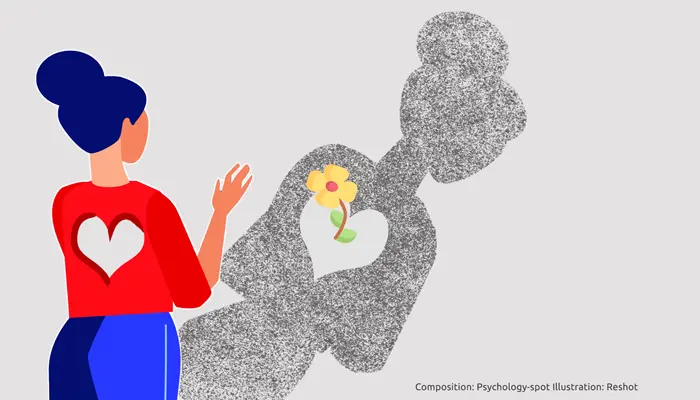
Julio Cortazar said: “nothing is lost if you have the courage to proclaim that all is lost and you have to start again”. And in our life, there’re moments when we have to start again, we have to close the circles, let the past go away and prepare to look forward, however it hurts.
In fact, this process of letting go the past to grab the future, creates often an emotional vertigo. This is because we identify the past with the safe path known we left behind us and perceive the future as an empty case ahead, an uncertain bet, a leap into the empty without a parachute.
For this reason, if we want to go on steadily and without remorse, it is essential to take the time for healing emotional wounds and rebuild ourselves emotionally. Hurry is never been a good counselor.
Emotional wounds cause profound changes that we have to accept
We’re often tempted to force the times. Sometimes, when we feel bad and suffer, all we want is only to get rid of the pain. We despair and look anxious to the future. It is understandable, but not positive.
On other occasions, are people around us that are pushing. Perhaps with the best of intentions, encouraging us to go ahead and take the next step. However, when we’re not prepared, the first step can cause us even more damage.
To look back to the future with trust, is essential to be patient and wait the healing of emotional wounds. It doesn’t mean wallowing in pain but move on with small steps, at our own pace, without rushing too much.
Time is critical to recover from emotional shocks, eventually we make sense of what has happened, we assume the past and turn the page. In fact, traumas usually cause a psychological earthquake, then we need time to rebuild, to look within ourselves and realize that we’re no longer the same, something has changed. After great emotional shocks we’re blocked and need time to recover, to understand, accept and even learn to live with the new person we’ve become.
Time to think, time to learn
On the other hand, time is critical to learn from the mistakes we made. If we get out a traumatic relationship, for example, and jump right away into the arms of another person, we haven’t had enough time to understand where we’ve been wrong. In fact, that’s one of the reasons why people are often involved in relationships that never succeed. They didn’t grant themselves enough time to grow.
Time allows us take emotional distance from the trauma, and then we can judge our behavior and decisions from a more objective and detached perspective. As a result, we’re able to assume our share of responsibility and grow.
On the contrary, rushing we’re at risk of repeating the same mistakes. Unfortunately, many people still believe that “one nail drives out another”, so they go through life so fast that their own speed stuns them. Although, sometimes all we need is to stop to mend the broken pieces and gather strength.
How we know when we’re ready to start again?
Everyone is different and each trauma or injury too. Be prepared to go on takes time and there’s no a particular rule, you must learn to connect with your inner and listen to the signals coming from your “ego”.
However, generally, a person is ready to move forward when meets at least two of the following conditions:
1. Pain is reduced. Looking back you realize that although the wound is still there, it no longer stings. In fact, you probably begin to remember more the positive aspects than those that caused you harm.
2. You’ve learned. Analyzing what happened, you manage to give it a sense and understand where you’ve been wrong. You assume the experience and that enriches you as a person.
3. You can make a joke about what happened. When you’re able to laugh at what happened, it means you’ve overcome the trauma, you released the situation of its initial drama.
In any case, don’t be afraid to take a step back if you advanced too quickly. Sometimes you may think you’re ready to move on, but actually you’re not. Then it’s better retreat to gather strength and heal completely.
Any new beginning is worth, but you have to make sure you can tackle this new phase with greater maturity and security.