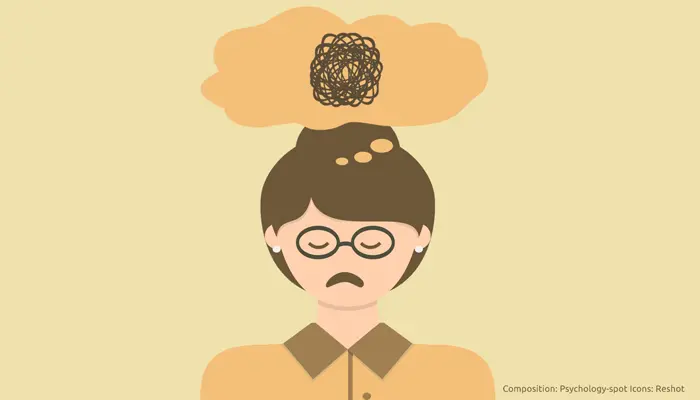
We’ve all felt anxious at some point. Sometimes it’s a worry about something we see in our future, other times it’s just a vague feeling that something isn’t right – even if we don’t know exactly what. However, when this state becomes the norm, it ends up affecting our quality of life and interfering with many of our daily activities.
We can’t escape anxiety, but we can learn to manage it to prevent it from taking over while protecting our emotional balance and preserving the mental bandwidth we need. The way we tell ourselves what’s happening to us is crucial, as it can either fuel the anxiety fire or extinguish it. Narrative therapy aims to change precisely that.
This type of therapy encourages us to examine the stories we tell ourselves about our anxiety in more detail and rewrite them so they are useful to us. By giving us a new perspective, it allows us to better control our emotions, rather than being controlled by them.
When we reflect on our personal narratives, we understand anxiety and connect it to other aspects of our lives. This shift often opens the door to new ways of coping with feelings of fear and anxiety, as well as mitigating their intensity.
Understanding anxiety through storytelling
The first step in narrative therapy is to show people how the stories they spin in their minds influence their anxiety level. Often, anxiety becomes the main story that determines how we see the world, relationships, what happens to us, and ourselves.
However, these stories are often a reflection of our fears, insecurities, or limitations, and they often make us feel out of control. The moment we identify this narrative, we can “detach” ourselves from the anxiety.
To foster this psychological distance, therapists often encourage their patients to name their anxiety or imagine it taking shape. This exercise helps us see anxiety as something we experience, not as part of our “self.” We stop perceiving it as a personal trait.
This creates a space for curiosity rather than fear, anxiety, or shame. We’ll find it easier to explore when it appears, what it tells us, and how it influences our decisions. This shift in perspective allows us to move from feeling paralyzed to seeing the possibilities for growth and action, even within the midst of anxiety.
In fact, a study conducted at the University of Michigan found that maintaining a certain psychological distance from what is happening helps us make better decisions and positively influences our attitudes and behaviors.
Rewriting the Narrative of Anxiety
Anxiety has a very convincing voice. It whispers to us that we won’t be able to make it, that something bad is about to happen, that everything will go wrong… And although these ideas don’t always have a basis in reality, they are repeated so often that they end up seeming like absolute truths. So, little by little, this narrative takes root in our minds and shapes the way we act, make decisions, and relate to others.
By repeating that story to ourselves over and over again, we end up believing it. We no longer question its veracity; we simply take it for granted. Narrative therapy invites us to observe these automatic scripts, challenge the lies anxiety tells us, and regain control over the version of our lives we want to develop.
At the same time, it motivates us to find stronger, more constructive, and more hopeful stories about ourselves. To achieve this, it’s important to identify moments when anxiety was present, but didn’t influence our actions or their consequences. In other words, that time we dared to take a step forward, regardless of the anxiety. And it wasn’t that bad.
Understanding that anxiety doesn’t always have the final say allows new perspectives to emerge and opens the door to change. We can begin to see ourselves differently, focusing more on our strengths, values, and support networks than on fear and anxiety. In fact, with narrative therapy, we can recognize the strengths that anxiety was hiding.
Narrative therapy in the management of anxious thoughts
An important part of managing anxiety is learning to replace anxious thoughts with more logical and constructive ideas. Narrative therapy helps us see these thoughts as part of the story we tell ourselves about anxiety, not as real facts.
Perceiving what’s going through our minds can be easier if we keep an anxiety journal, as it will help us detect recurring patterns that would otherwise go unnoticed. From there, narrative therapy offers various tools to reframe these thoughts and transform the story we tell ourselves.
One way is to rewrite the dominant narrative. Once we identify the most common anxiety messages (“you’re going to fail,” ” you can’t do it,” “everything will go wrong“), we can write alternative versions. For example, we can focus on moments when we managed to cope with a difficult situation, even though anxiety was present.
From there, we must reframe those thoughts. Thus, the idea “I’m going to fail” can be replaced with “I’m going to do my best.” This technique strengthens a more balanced and realistic narrative, in addition to helping us develop a more resilient attitude.
In this regard, a study conducted at North Khorasan University of Medical Sciences found that narrative therapy is not only effective in treating generalized anxiety, but is particularly useful in increasing our tolerance to stress and anxiety-provoking situations. In other words, it makes us stronger in the face of adversity. It has also been shown to be effective in alleviating anxiety symptoms, even in people who have experienced highly traumatic events.
There’s no doubt that rewriting the story we tell ourselves about how we feel can make a difference. It may not completely erase anxiety, but it helps us put it in perspective and lessen its impact. Narrative therapy doesn’t promise to eliminate anxiety, but it allows us to live with it from a more conscious, compassionate, and empowered place.
References:
Mihigo, E. et. Al. (2025) Contribution of narrative therapy in reduction of anxiety, depression and PTSD among survivors of the genocide against the Tutsi in 1994 in Rwanda. PLOS Mental Health; 2(4): e0000287.
Abbasi, A. et. Al. (2020) The Effectiveness of Narrative Therapy on Anxiety and Tolerance of People with Generalized Anxiety Disorder. Conference: Conference: 4th International Conference Humanities, Social and Lifestyle.
Kross, E. & Grossmann, I. (2012) Boosting Wisdom: Distance From the Self Enhances Wise Reasoning, Attitudes, and Behavior. Journal of Experimental Psychology: General; 141(1): 43-48.




Susan says
I’ve been researching therapy for anxiety around the Tampa Bay region because I’ve realized that my childhood patterns are still dictating my adult decisions and causing unnecessary tension. I’m looking for a clinical setting in Carrollwood that feels safe but also very professional and research-oriented. I’m particularly interested in how brain-based therapy can help with deep-seated emotional blocks that traditional methods often overlook. It is a bit overwhelming to start this search, but I think having a clinical perspective would make me feel more confident in the long-term healing process and overall results.