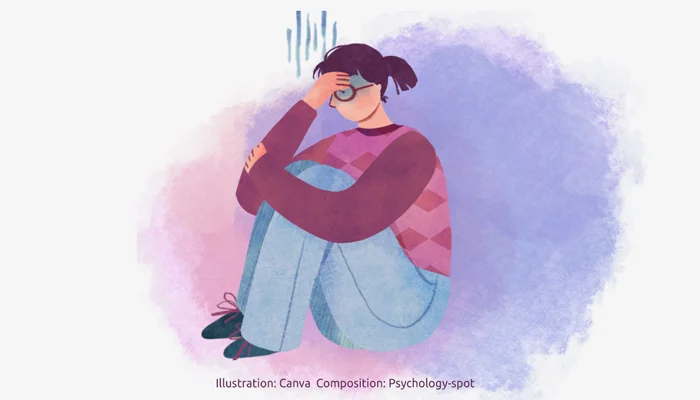
Silent anxiety is invisible. It doesn’t command attention like generalized anxiety. It doesn’t cause palpitations, shortness of breath, or profuse sweating. It’s not abrupt, disruptive, or obvious. But that doesn’t mean it isn’t there. In fact, it can be very persistent and profoundly affect your daily functioning.
What exactly is silent anxiety?
Anxiety is not a single disorder, but rather manifests itself in different ways. Silent anxiety is an internal state of constant tension, difficult to identify, that disguises itself as normality. It could be categorized as subclinical anxiety since its symptoms do not meet the criteria for a formal diagnosis of an anxiety disorder, but although it doesn’t make noise, it is just as debilitating as “visible” anxiety and ends up affecting life in very subtle ways.
The worst part is that, because we’re often unaware of its existence, many people live with this type of anxiety for years without ever naming it. They get used to functioning in alert mode, clenching their teeth at night, always feeling “a little restless,” and never feeling fully rested. And since it doesn’t seem so “serious,” they don’t seek help. While it’s true that silent anxiety doesn’t paralyze you, it does erode you little by little, eventually causing significant emotional exhaustion.
Unlike generalized anxiety, invisible anxiety, as it is also known, is less intense. It doesn’t incapacitate or block you, but it erodes and exhausts you. Its burden begins as more cognitive than physical; that is, the bodily symptoms are less intense, but it unfolds with an underlying emotional tension and a racing mind, a state that is often mistaken for stress.
Silent anxiety: 10 symptoms that go unnoticed
Silent anxiety doesn’t involve panic attacks, emotional breakdowns, or hyperventilation, but it gradually wears down the mind and body. Some of its most common symptoms are:
- Constant mental restlessness. There are no extreme catastrophic thoughts, but the mind never rests. There is constant mental hyperactivity: reviewing tasks, anticipating problems and setbacks… giving the feeling of always being preoccupied with something.
- Unexplained exhaustion. Waking up tired, even after a good night’s sleep, is a typical sign of silent anxiety. This is because the body – and the brain in particular – is constantly in alert mode, so it never gets to fully rest.
- Constant physical tension. It’s nothing serious or debilitating, but it’s always there. It usually manifests as a stiff neck, a clenched jaw, and rigid shoulders.
- Difficulty relaxing. You probably find it hard to “switch off.” Even when you have free time, you feel you should be doing something useful or you can’t fully enjoy it, so you look for something to keep you occupied.
- Mood swings. There aren’t any major outbursts, but emotions become more volatile than usual. It’s an emotional malaise that colors all everyday situations and makes you unpredictable, even to yourself.
- Environmental hypersensitivity. Decreased sensory and environmental tolerance: noises that didn’t bother you before now seem invasive, clutter overwhelms you, interruptions saturate you, and external demands exhaust you faster than usual.
- Memory and concentration problems. Not due to mental blocks, but rather saturation. Your mind jumps from one thing to another without settling on any one. You may even experience brain fog.
- Avoidance of uncertain situations. Unlike phobias, in silent anxiety certain situations are not avoided out of fear, but out of anticipated exhaustion. Your mind simply rejects them, thinking: “Ugh… that’s going to exhaust me completely.”
- A vague unease that prevents you from being at your best. There’s a slight but constant feeling of dissatisfaction, like an uncomfortable background noise. Even though everything seems to be going well, you have the feeling that something isn’t quite right, and you can’t quite feel completely satisfied.
- A feeling of constant pressure. You feel like you always have too much to do or that life demands more than you can give. It’s not just occasional stress, but continuous pressure that wears you down.
This form of anxiety doesn’t cause immediate disability, but its effects are noticeable in the long term, leading to a progressive decline in quality of life and well-being. In fact, if not addressed in time, it can become chronic and develop into a very powerful anxiety.

The 5 most common causes: Why does invisible anxiety appear?
Invisible anxiety doesn’t usually appear suddenly. It’s like a thread that gradually tightens until you begin to notice a weariness and tension that never disappear, as if they’ve become unwanted, permanent companions. There isn’t a single cause; rather, it’s a combination of factors that feed off each other and often go unnoticed or hide behind a veneer of “normality.”
- Demanding personalities. If you’re a perfectionist, self-demanding, or feel you always have to do everything, you’re more likely to suffer from anxiety because your mind never rests. You’ll push yourself again and again, creating constant tension.
- Overwhelming environments. A job that gives you no respite, endless tasks, family or social commitments that absorb all your energy… All this creates a constant noise that prevents you from relaxing.
- Lack of real rest. Being busy all day and never switching off creates a silent but corrosive wear and tear. The body and mind function, but you never truly recharge them.
- Emotional overload. Caring for others can be rewarding, but if you don’t make space for yourself, anxiety will build. That feeling of giving more than you receive eventually takes its toll.
- Daily stress. You don’t need to experience a major trauma to develop anxiety. Sometimes, cumulative stress (meetings, pending tasks, unexpected events, or minor pressures) creates constant tension that drains your resources.
How to treat silent anxiety? The approach that works best
It may sound obvious, but the first step in addressing silent anxiety is acknowledging its existence. Stopping the pressure you put on yourself to perform better or thinking you should “be able to handle it all” means facing what’s happening to you head-on, even if your symptoms don’t fit the classic profile of anxiety.
In practice, I see that when people manage to label what they’re experiencing (when they tell themselves, “this is anxiety”), they instantly feel lighter and more relieved. Science also confirms this. An experiment conducted at the University of California showed that labeling emotions reduces the physiological arousal that anxiety causes.
Acknowledging your anxiety is also a kind of “safe passage.” It allows you to give yourself permission to take a break, pause, and pay attention to yourself. From there, you can practice breathing exercises, mindfulness meditation, or cognitive restructuring for anxiety. There are countless psychological techniques to help calm an anxious mind.
However, I’ve found that what truly makes a difference is something as simple as recognizing and accepting anxiety as part of your life experience, without hiding or minimizing it. This simple act of honesty with yourself reduces accumulated tension and creates space to begin feeling freer and treating yourself with greater kindness.
In fact, an experiment conducted at Stanford University found that acceptance reduced anticipatory anxiety more than attempts at suppression. Neuroscientists at Harvard University also found that accepting anxiety reduces distress and worry, leading to positive changes in the brain.
Therefore, neither yoga classes, spiritual retreats, nor stress management techniques will eliminate anxiety if you don’t change the way you relate to yourself. Accept that you can’t do everything, that you are vulnerable, and that you need to take life more calmly. In my experience, this is the approach that works best because it usually gets to the root of anxiety: tension and excessive self-demand.
References:
Ellard, K. et. Al. (2017) Neural correlates of emotion acceptance vs worry or suppression in generalized anxiety disorder. Social Cognitive and Affective Neuroscience; 12 (6): 1009-1021.
Niles, A. N. et. Al. (2015) Affect labeling enhances exposure effectiveness for public speaking anxiety. Behav Res Ther; 68: 27-36.
Braams, B. R. et. Al. (2012) The effects of acceptance and suppression on anticipation and receipt of painful stimulation. J Behav Ther Exp Psychiatry; 43(4): 1014-1018.




Leave a Reply