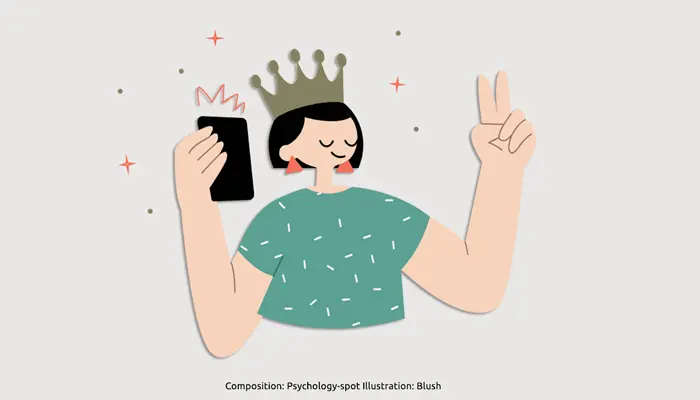
We are our memory. Memory helps us make sense of our lives by organizing autobiographical events and constantly reminds us who we are and where we’re headed. Without memory and the memories it stores, we would be lost; we would have to reinvent ourselves every day. Therefore, it’s essential to do everything in our power to preserve memory and ensure we store solid memories.
Memory is not a static store
Most people think of their memory as a repository where they store memories. However, it’s not a static repository; these memories can change. In fact, they aren’t even a faithful copy of the events we experience.
Every time we recall an event, we can accidentally alter it or diminish its accuracy. Even trivial memories are easily corrupted by mere suggestion. Psychologist Elizabeth Loftus, for example, found that when she told people that cars “crashed” instead of “crashing,” they remembered the car accident as more severe than it actually was.
Tiny details like this can influence our memories, but perhaps the most frustrating thing is that we change those details and reconstruct reality without even realizing it. Therefore, it’s not trivial to wonder how one of our most common habits – taking pictures of all our experiences – can influence our memory.
How are memories formed?
The first step to forming a lasting memory is paying attention. It’s that simple. If we don’t pay attention, our brain won’t be able to store the sensations we experience.
Our brain then stores long-term memories by establishing neural connections. The more intense the experience, the stronger those connections, and the less likely we are to forget what happened. This is why we don’t easily forget events that have had a great emotional impact or lessons that are significant to us.
Thanks to these connections, we can not only remember what happened but also connect that memory to certain smells, sensations, emotions, and words. However, if we aren’t paying attention, if we aren’t even acquiring the basic information needed for short-term memories to form, nothing will be stored long-term in the brain. Consequently, without attention, there are no memories.
The experiment that showed how taking photos affects our memory
Stanford Memorial Church is a striking building that demands attention. It’s magnificent, both inside and out. However, psychologists at Princeton, Austin, and Stanford University have found that it’s easier to forget the details if we take photos.
In a series of experiments, hundreds of participants were given a tour of the church, during which they were asked to take mental notes of the most important details. Some were asked to enter empty-handed, others were asked to take photos with their smartphones.
After a week, the researchers tested the participants’ memory by asking them for details about the church. Those who toured the building without a camera answered 7 out of 10 questions correctly. Those who took photos, contrary to all expectations, not only did not remember details better but also made more mistakes, answering an average of 5 or 6 questions correctly.
These psychologists explain that “While we use these devices, we are distracted from the experience. This distraction causes us to forget the details we should be paying attention to.”
Given that smartphones are ubiquitous in our lives, these psychologists are concerned that this gigantic source of distraction could end up affecting our ability to form lasting and reliable memories.
Cognitive Offloading: Using Your Smartphone as an “Expanded Memory”
Adding to the distracting effect of cell phones is what’s known as “cognitive offloading” or “expanded memory,” which involves externalizing our memory. In practice, we worry less about paying attention and remembering because we have a photo to refer to.
In fact, another experiment conducted at Columbia, Wisconsin, and Harvard Universities revealed that when we’re confident we can store information on a device, we remember less information.
This effect is even more pronounced in people who don’t like to think much, as confirmed by another study conducted at the University of Waterloo. In practice, these people turn their smartphones into a kind of cognitive crutch. They don’t exert their cognitive resources because they rely on technology.
Although the truth is, we don’t need to resort to scientific studies to understand the phenomenon of cognitive outsourcing. You probably can’t even remember half of the phone numbers in your address book right now, but before the advent of cell phones, you made an effort to memorize as many phone numbers as possible. This is a clear, everyday example of the “expanded memory” phenomenon.
What’s wrong with that? Well, cognitive functions that aren’t used deteriorate more quickly because you don’t build up what’s known as “cognitive reserve,” which protects us from dementia.
Every photo you share takes away the emotion from the memory
In recent years, we’ve not only started taking more and more photos with our phones, but we’re also sharing them almost instantly on social media. This new habit can also alter our memories, in subtle but profound ways.
Another group of psychologists at Yale University found evidence that taking photos to share on social media changes our perspective within memory. They found that participants who took photos with the intention of sharing them on social media tended to recall the moment from the perspective of an outside observer.
What does that mean?
The impact is enormous because we detach ourselves from what’s happening. When we adopt a third-person perspective, emotions are less intense than when we experience things firsthand. Being the protagonists of our experiences makes us experience more genuine emotions, so our memories will be stronger in the long run.
In some cases, this detachment can be positive, as it might help us mitigate the pain, but living our lives as outside observers isn’t exactly the best way to make the most of our experiences and consolidate our memories.
Of course, all of this doesn’t mean that smartphones are making us stupid or that they personalize absolute evil, but we mustn’t forget that we should use technology to expand our capabilities, not reduce them. Of course, the decision is in your hands.
Sources:
Tamir, D. I. et. Al. (2018) Media usage diminishes memory for experiences. Journal of Experimental Social Psychology; 76: 161-168.
Barasch, A. et. Al. (2018) How the Intention to Share Can Undermine Enjoyment: Photo-Taking Goals and Evaluation of Experiences. Journal of Consumer Research; 44(6): 1220–1237.
Barr, N. et. Al. (2015) The brain in your pocket: Evidence that Smartphones are used to supplant thinking. Computers in Human Behavior; 48: 473-480.
Sparrow, B. et. Al. (2011) Google Effects on Memory: Cognitive Consequences of Having Information at Our Fingertips. Science; 333(6043): 776-778.




Leave a Reply