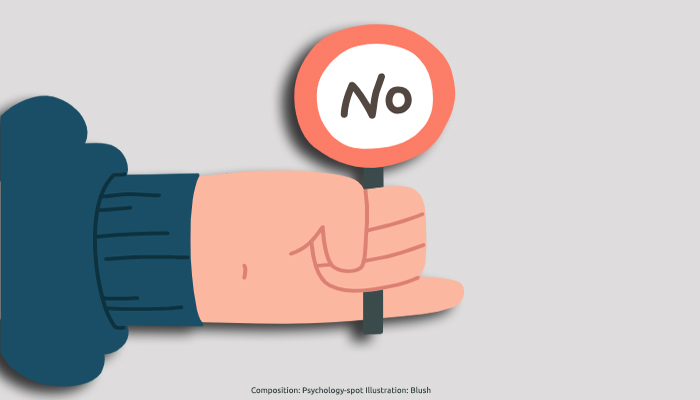
We live in a society that often confuses kindness with submission, respect with obedience, and boundaries with selfishness. As a result, we often say “yes” when we want to shout “no,” we feel compelled to explain our personal decisions as if we were in court, and we feel guilty for the simple act of existing or for trying to set boundaries for others.
The root of the problem? That we don’t know – or exercise – our assertive rights.
Although they aren’t printed in the Constitution or taught in school, assertive rights are like an internal manual of emotional dignity: they remind us that we are valuable, that we have our own voice, and that we don’t need to ask permission to protect ourselves, take care of ourselves, or change our minds.
But… what is assertiveness exactly?
Assertiveness is the ability to express our rights without harming others. It is a social skill that includes all the thoughts, attitudes, and behaviors that allow us to assert our rights without harming anyone, taking into account the most appropriate time, manner, and place.
An assertive person is able to express their opinions openly and without fear, while respecting others, in order to reach a solution that is as satisfactory as possible for everyone.
Assertiveness moves away from submission and reclaims the space of individuality, but at the same time, respects the uniqueness of others. It means speaking your mind without overriding, setting boundaries without feeling guilty, and prioritizing your needs when appropriate. Being assertive isn’t synonymous with being nice all the time. It’s about being clear that your opinion, your emotions, and your decisions count – and acting accordingly without stepping on anyone’s toes.
Instead, when we allow our rights to be trampled upon, we fall into a vicious cycle in which we lose our essence, to the point of being subjugated while we feed insecurity and dissatisfaction.
So… what are our assertive rights?
There are things that should come standard: saying “no” without guilt, changing your mind without feeling guilty, or asking for what you need without fear of upsetting others. But we weren’t taught these things. What we did learn was to please, be silent, and give in. Assertive rights exist precisely to remind us that we can also prioritize ourselves.
1. You have the right to be treated with respect and dignity
It’s not a privilege. It’s not an optional courtesy. It’s a right. Respect doesn’t depend on how many degrees you’ve had, how nice you are, or how many times you’ve sacrificed for others. If someone yells at you, humiliates you, ignores you, or treats you terribly, it’s likely that person only knows how to relate to others through aggression. You may not be able to change them, but you can learn to say, “Enough!” If someone needs to crush you to feel big, they should buy a ladder, but not use you as a rug.
2. You have the right to be wrong
Making mistakes doesn’t make you less valuable. It makes you human. No one is born knowing, much less knowing how to do everything right. You have the right to make mistakes and acknowledge that you’ve made a mistake without it becoming a life sentence hanging over your head. Mistakes don’t define you. But what you do afterward does. So take responsibility, try to repair the damage, and move on.
3. You have the right to express your opinions and emotions, as well as to change your mind
You’re not obligated to remain tied to what you thought when you were 15. You can evolve. You can change your mind. You can change your dreams and goals in life. You can recognize: “I used to believe this, now I think differently.” Change isn’t betrayal, it’s growth. And the same goes for your emotions: you can feel happy, then sad, then at peace, all in the same day. It’s your right; you don’t have to justify everything.
4. You have the right to put your needs on the same level as those of others
Neither above nor below. Your needs are just as important as those of others. Because if you always put yourself in the background so others can be okay, you’ll be the one who won’t be okay. It’s not selfish to say “I matter too.” Selfish is someone who expects you never to say it. Therefore, pay attention to the needs of those around you, but don’t neglect your own.
5. You have the right to decide what you think, feel and do, assuming your responsibility
Translation: You can think for yourself. You can decide that what you feel or believe is valid without needing to ask for external validation. And yes, that also means accepting the consequences of your actions. Because emotional freedom includes responsibility. It’s an inseparable package. And be careful: just because others don’t agree with you doesn’t always mean you’re wrong. Sometimes they’re simply projecting their discomfort or ignorance.
6. You have the right not to provide reasons to justify your behavior
You don’t have to justify every “no” you say, every decision you make, or every preference like a defendant in an interrogation. “No” is a complete sentence in itself. “I don’t feel like it” is also sufficient. You can say no without explaining yourself. If someone is uncomfortable with you setting limits without justifying yourself, the problem isn’t the limit itself; it’s a lack of habit.
7. You have the right to be independent of other people’s expectations
You’re not in this world to please others. You don’t always have to agree. You don’t always have to bend. You don’t have to meet other people’s expectations. You have the right to disagree without it breaking the relationship. Note: this doesn’t mean being an emotional bulldozer that crushes everything in its path, but it does mean having the courage not to silence or ignore yourself just to avoid tension and conflict. Disagreement is not the enemy. Forced silence is.
8. You have the right to say: “I don’t understand”
Not understanding something doesn’t make you weak or less intelligent. It makes you honest. It allows you to learn and continue growing. Because when you do, you accept two things: 1. That you don’t know everything, and 2. That you care enough to ask. You also have every right to ask for explanations when someone speaks in an abstract/bureaucratic way or uses veiled sarcasm. Pretending you understand everything only serves to accumulate ignorance.
9. You have the right to decide what to do with your body, your time and your property
Your body is yours. Your time is yours. The things you’ve bought or built are yours. You don’t have to lend, give away, or share under pressure. What you do with your body (from how you dress to who you share it with) is your business. What you do with your time is your business, too. If today you want to rest instead of going to that dinner party… Guess what: you can. And yes, you can also decide that your weekend is sacred or that that armchair you so carefully chose is just for you.
10. You have the right to be happy
Yes. Even if others are sad. Even if they tell you you don’t deserve it. Even if you’ve been taught that you must first suffer to earn joy. Being happy doesn’t need justification. You don’t have to wait for everything to be perfect, for all the planets to align, or for all the world’s problems to be solved before you can enjoy your life. And if someone is bothered by your happiness, remember: other people’s discomfort is not your problem.
Obviously, these assertive rights don’t imply a license to go through life shouting “I am what I am and I’m not going to change” or to bully others. They are the basis for healthy coexistence, a coexistence in which you respect yourself and others first, and then demand respect.
So the next time you feel like you’re asking for permission to exist, remember these assertive rights because the more you exercise them, the harder it will be for others to overrule you. And if someone doesn’t like it… well, you know: you have the right not to worry about that, too.




Leave a Reply