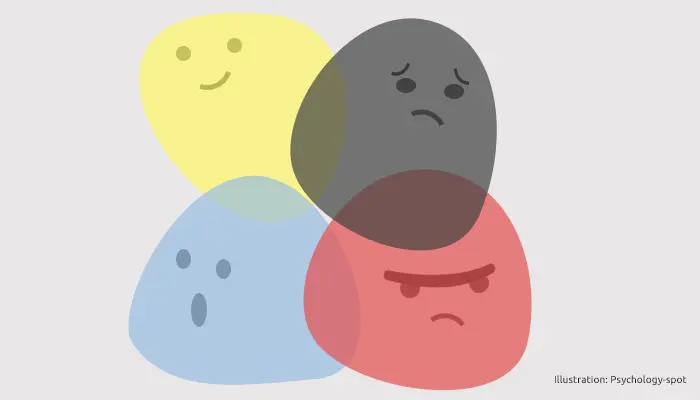
Do you constantly analyze conversations or gestures in search of hidden meanings? Are you overcome with deep anxiety at the possibility of causing a conflict? Do you walk on eggshells so as not to upset others? Do you constantly feel on edge?
If you identify with this, you may be in a state of emotional hypervigilance. And it’s not a personality trait, but a survival strategy you learned at some point in your life that is likely undermining your mental health and well-being.
What exactly is emotional hypervigilance?
Emotional hypervigilance is a state in which the nervous system remains on constant alert, searching for any sign of emotional danger, even when there is no real threat. It’s as if your internal radar is constantly on, scanning your surroundings.
Instead of detecting physical risk, the danger is relational or emotional. Your mind looks for subtle signs of rejection, disapproval, or abandonment, usually without you even realizing it. This means constantly being attuned to other people’s moods, reactions, and tone of voice to avoid being emotionally hurt.
Where does Emotional Hypervigilance come from?
Emotional hypervigilance does not arise from nothing; it usually has deep roots in early experiences or traumatic situations.
Perhaps it started in your childhood, especially if you grew up with adults whose emotions were unpredictable. Maybe your parents or caregivers were emotionally immature or had frequent mood swings, blamed you for their feelings, or got angry at the slightest mistake you made.
In that case, you probably learned that to survive emotionally you had to anticipate other people’s reactions and adapt quickly. Always being on guard, staying silent, avoiding conflict, or pushing yourself too hard became necessary strategies, not conscious choices.
However, emotional hypervigilance can also stem from psychological trauma. Experiences of bullying, violence, or significant losses that generate intense fear can leave your nervous system stuck in a state of permanent “internal alert.”
Your brain learns to be constantly alert to danger signals, even in safe environments. In fact, studies have shown that people with emotional hypervigilance and anxiety are actually faster at detecting the most subtle changes in others’ tone of voice, facial expression, or body language, allowing them to anticipate potential conflicts or rejections.
The problem is that what was once a useful strategy becomes an automatic and maladaptive habit that keeps your body and mind in a state of constant vigilance, which will eventually take its toll.
How does emotional hypervigilance manifest itself?
Emotional hypervigilance often manifests itself through small habits that people tend to live with for years. They think, “That’s just how I am,” without realizing that it’s actually an internalized survival strategy.
- Anticipatory anxiety
Your mind is constantly racing ahead, anticipating what could go wrong. Before a conversation or even before sending a message, you’re already thinking about all the negative scenarios. Not because you’re pessimistic, but because your emotional system has learned that anticipation is a form of protection. The problem is that this anticipation keeps you in a constant state of anxiety, which ends up affecting your daily life and your well-being.
- Constant concern
Worry becomes a constant background noise. It’s not always intense, but it is persistent. Hypervigilance leads you to jump from one “danger” to another. An unanswered message can turn into a barrage of catastrophic thoughts like, “Did something bad happen? Are they angry with me?” You’re always worried – about what you said or didn’t say, about the gesture you didn’t quite understand, and about everything that could happen, even when there’s no real reason to be.
- High emotional reactivity
Small stimuli that go unnoticed by others trigger disproportionate responses in you. You experience a neutral comment as criticism, a delay as rejection, and a disagreement as a threat. You don’t react this way because you’re “too sensitive,” but because your nervous system is overwhelmed and has a very low activation threshold.
- Psychosomatic symptoms
Emotional tension eventually manifests in the body. The continuous activation of the sympathetic nervous system causes muscle stiffness and neck tension. You may also experience emotional headaches or a feeling of tightness in your chest. Fatigue, insomnia, and digestive problems are other common symptoms. It’s your body telling you that you can’t go on like this.
- Disconnecting from oneself
Paradoxically, being so focused on the emotions of others often distances you from yourself. When much of your attention is concentrated on how others feel, anticipating their reactions, or avoiding conflicts, you lose touch with your own needs, desires, and boundaries. You may find it difficult to know what you want, what you feel, or what you truly need. This internal disconnection is often accompanied by a feeling of emptiness and emotional exhaustion.
Psychological treatment is key to preventing more serious mental health problems.
Taking the first step isn’t easy. An average of 17 years passes between the first psychological symptoms and the first consultation. And that’s far too long.
Living with emotional hypervigilance is not only exhausting, it also isolates you. When you’re constantly on high alert, you’re likely to interpret neutral gestures as rejection, silence as disapproval, or disagreements as threats. Over time, this can lead to emotional distance from others, avoidance of uncomfortable conversations, or a feeling of being misunderstood. In fact, a study published in Personality and Individual Differences revealed a link between loneliness and emotional hypervigilance.
In close relationships, hypervigilance can also translate into hyperadaptation. In other words, you try too hard not to upset and to please those around you, so you’re likely to end up developing unbalanced relationships where you feel you can’t be yourself. In the long run, this pattern increases the risk of chronic anxiety, depression, and emotional burnout.
The good news is that emotional hypervigilance is treatable. It’s not about eliminating your sensitivity, but about recalibrating your alert system. In therapy, we typically work to help you:
- Identify which current situations trigger your hypervigilance
- Recognize which past learnings or experiences continue to reinforce that pattern
- Learn to distinguish between a real danger and a perceived threat
- Restructure your thinking so you don’t always jump to the worst-case scenario
- Implement strategies to reduce anticipatory anxiety
- Gain confidence, security, and a sense of control
Furthermore, psychological treatment will help you reconnect with yourself. Therapy allows you to recover that inner compass so you can recognize what you feel, set boundaries without guilt, and express your emotions assertively. In the long run, you will not only feel better, but your relationships will change, leading to more authentic and less draining connections.
References:
Bacon, A. M. & Norman, A. (2025) Emotional hypervigilance: Development of a new questionnaire and examining the importance to posttraumatic quality of life. Psychol Trauma; 10.1037.
Meng, J. et. Al. (2020) State loneliness is associated with emotional hypervigilance in daily life: A network analysis. Personality and Individual Differences; 165: 110154.
Longin, E. et. Al. (2013) Impact of fearful expression on danger processing: The influence of the level of trait anxiety. Personality and Individual Differences; 54(5): 652-657.
Wang, P. S. et. Al. (2007) Delay and failure in treatment seeking after first onset of mental disorders in the World Health Organization’s World Mental Health Survey Initiative. World Psychiatry; 6(3): 177-185.




Leave a Reply