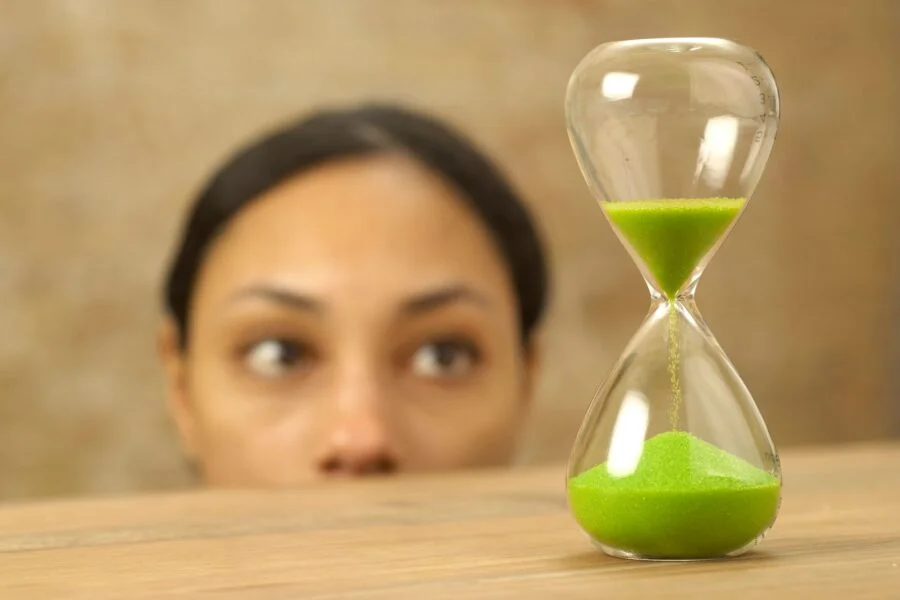
There are phrases that sound so good and are so comforting that it’s hard to question them. “Everything comes to those who wait” is one of them. In fact, you’ve probably heard it more than once, or even used it yourself to try to comfort someone.
The idea is cloaked in universal comfort, with airs of ancient wisdom and a hint of reassuring promise. Essentially, it tells us there’s no need to rush, push ourselves too hard, or worry. All we need is patience. And eventually, the stars will align to grant us what we want – or need.
The problem (surprise!) is that life doesn’t work that way. Disappointing as it may be, the universe doesn’t keep a list of the names of those who have waited patiently and long enough to reward them when their turn comes.
Confusing patience with passivity can become a very insidious psychological trap that condemns us to inaction and a state of perpetual dissatisfaction. Because waiting can be a virtue in some cases, but in others it can become a perfect excuse to remain idle and do nothing.
When patience turns into paralysis
I’ve always been a firm believer in patience. I think the ability to tolerate delays, manage frustration, and stay focused on the goal, even if we don’t see immediate results, is essential for achieving great things in life (and also for avoiding serious mistakes born of haste).
No one doubts that not everything is achieved on the first try and that some things need time to develop. However, there is a substantial difference between waiting while we build something and waiting for something to happen on its own – or by the grace of the Holy Spirit.
In the first case, we are simply accepting that the results won’t be immediate, but we still decide to keep trying. We test different alternatives, learn, correct our mistakes, and adapt to the circumstances.
In the second case, we simply remain immobile, trusting that external conditions will eventually change. From the outside, this may appear to be equanimity, but something else is brewing inside, because often it is nothing more than fear disguised as patience.
It could be fear of making mistakes, of failing, of disappointing others, of discovering that what we desire requires far more effort than anticipated, or even fear of closing certain doors behind our backs. Ultimately, believing that everything comes to those who wait fosters an external locus of control that absolves us of taking responsibility for our decisions.
Waiting as a refuge to avoid uncomfortable decisions
The idea that patience is all it takes to achieve what you want is often intertwined with advice like “don’t force things” or “what’s meant for you will come.” Obviously, these phrases can help us put difficulties into perspective and reduce anxiety about what we can’t control. The problem arises when we use them as an excuse to do nothing and forget about doing what is within our control.
In fact, not all situations require acceptance. Some need clear boundaries. Nor do all problems require patience. Some demand an uncomfortable conversation, a difficult decision, or a change of course as soon as possible. And not all opportunities arrive when you’re ready; sometimes you have to go out and find them, take risks, and accept the possibility that things won’t turn out well.
Turning waiting into a kind of sacrosanct cure-all can provide a sense of control without requiring any real action. It’s a comfortable psychological strategy because it allows us to maintain hope without having to confront uncertainty or the vertigo of change. However, there’s a substantial difference between trusting the process and delegating decisions to circumstances.
The psychological price of waiting too long
Staying in an unsatisfactory situation for too long has significant consequences. When a person feels the need to change something but continually postpones the decision, they often experience frustration, helplessness, and a growing sense of stagnation.
Furthermore, the longer they go without taking action, the easier it becomes for them to get used to that reality. What initially seemed temporary ends up becoming routine. This is how they learn to tolerate a job that doesn’t satisfy them, a relationship that no longer works, habits that harm them, or a life that is far removed from the one they desire.
The concept of learned helplessness helps to understand part of this phenomenon. Basically, repeated exposure to situations in which one perceives a lack of control over what happens can lead us to stop trying to change the circumstances, even when the ideal conditions for doing so arise.
Of course, that doesn’t mean that every prolonged wait is a sign of learned helplessness, but it helps us pay attention because the feeling of lack of control can end up weakening initiative and extinguishing the motivation to act.
The paradox is that the less we do, the harder it becomes to regain a sense of self-efficacy. Thus, we may begin to interpret this inaction as proof that we can’t change anything, when perhaps what we need is precisely to take small steps.
It’s not about being in a hurry, but about stopping procrastination
Questioning the idea that everything comes to those who wait doesn’t mean advocating impatience or haste. Some processes need to mature slowly, some goals require preparation, and some circumstances are beyond individual control. In fact, demanding immediate results can generate just as much frustration as waiting indefinitely.
The key is to distinguish between what needs time and what demands a certain amount of action.
If you want to change jobs, patience can help you endure the search process, but it’s no substitute for updating your resume, training, or submitting applications. If you want to improve a relationship, waiting for things to work themselves out isn’t the best approach. And if you’re looking for a more fulfilling life, trusting that everything will eventually fall into place doesn’t seem to be a particularly effective strategy.
A more useful question is: Am I waiting because there is a real reason to do so, or only because taking action forces me to confront something that makes me uncomfortable?
It’s also worth remembering that taking action doesn’t guarantee the desired results. We can work hard and not achieve the expected outcome, make a bold decision and be wrong, or pursue an opportunity that ultimately doesn’t materialize. Action offers no guarantees, but at least it increases our ability to influence our own path.
And that is precisely the difference: waiting leaves the outcome in the hands of circumstances; acting allows us to anticipate or change what is within our power.
Life doesn’t reward patience, it only responds to what we do
Enduring longer, suffering in silence, or waiting with a smile while circumstances magically “decide” to change brings no automatic reward. The universe – for better or worse – doesn’t work like a customer service department that records waiting times and grants compensation.
Sometimes things happen in time. Other times they never happen, simply because no one has taken the necessary steps to make them happen.
Therefore, it might be advisable to replace the idea that “everything comes to those who know how to wait” with a much more useful question: “Am I doing everything in my power to make what I want happen?”




Leave a Reply